
Tile Guides
Porcelain Wood-Look Tile vs. Real Hardwood: When the Lookalike Wins
Porcelain wood-look tile has reached the point where a designer at three feet often cannot tell it apart from real hardwood. It is fully waterproof, scratch-proof against pet claws, and rated for outdoor patios. Real hardwood still wins on warmth, refinishability, and resale value in the right rooms — but for bathrooms, mudrooms, kitchens with radiant heat, and any pet-heavy household, modern porcelain wood-look tile is the smarter pick.
Should I install porcelain wood-look tile or real hardwood?
Pick porcelain wood-look tile when moisture, pets, or radiant heat are in play. Pick real hardwood for formal rooms where you want refinishability and the highest resale value. Most homeowners end up using both in the same renovation — tile through wet zones, hardwood through the formal living and bedrooms.
When does porcelain wood-look tile make more sense than hardwood?
Five situations where the tile wins outright:
- Bathrooms and laundry rooms: hardwood and standing water do not coexist. Porcelain shrugs off both.
- Mudrooms and back-entry zones: winter salt, slush, and dog paws will dent and discolor hardwood within a season.
- Kitchens with radiant floor heat: hardwood requires special engineered constructions and humidity control. Porcelain is the natural surface for radiant systems.
- Pet households with large dogs: hardwood dents under nails; porcelain does not.
- Indoor-outdoor transitions: the same wood-look porcelain plank can run from the kitchen through to a covered patio. Hardwood cannot.
How realistic does modern porcelain wood-look tile look?
The current generation uses digital ink-jet printing at the wear-layer level — meaning the wood grain is not a repeat pattern but a hundred-plus unique faces rotated through the run. Edge bevels mimic real plank shadow lines. Long-format planks (the 8″ × 40″ and 8″ × 47″ sizes we install most) read as wide-plank hardwood at standing distance.
What rooms is wood-look porcelain tile best for?
The full water-, scratch-, and stain-resistance profile makes it the right pick for any room where hardwood would be a compromise. Most clients run it through:
- Kitchens (especially with islands and bar stool wear zones).
- Full bathrooms and powder rooms.
- Mudrooms and laundry rooms.
- Basement living rooms (below grade where solid hardwood is forbidden).
- Sunrooms with heavy temperature swings.
- Pool decks, covered patios, and outdoor kitchens.
Does porcelain wood-look tile cost more than hardwood?
Installed, premium porcelain wood-look tile runs in a similar bracket to mid-grade engineered hardwood — sometimes slightly more once you factor in tile-setter labor, thinset, and grout. The savings come over the life of the floor: porcelain does not need refinishing, does not stain, and does not need to be replaced in wet rooms a decade later.
Where can I see wood-look porcelain samples in Lebanon?
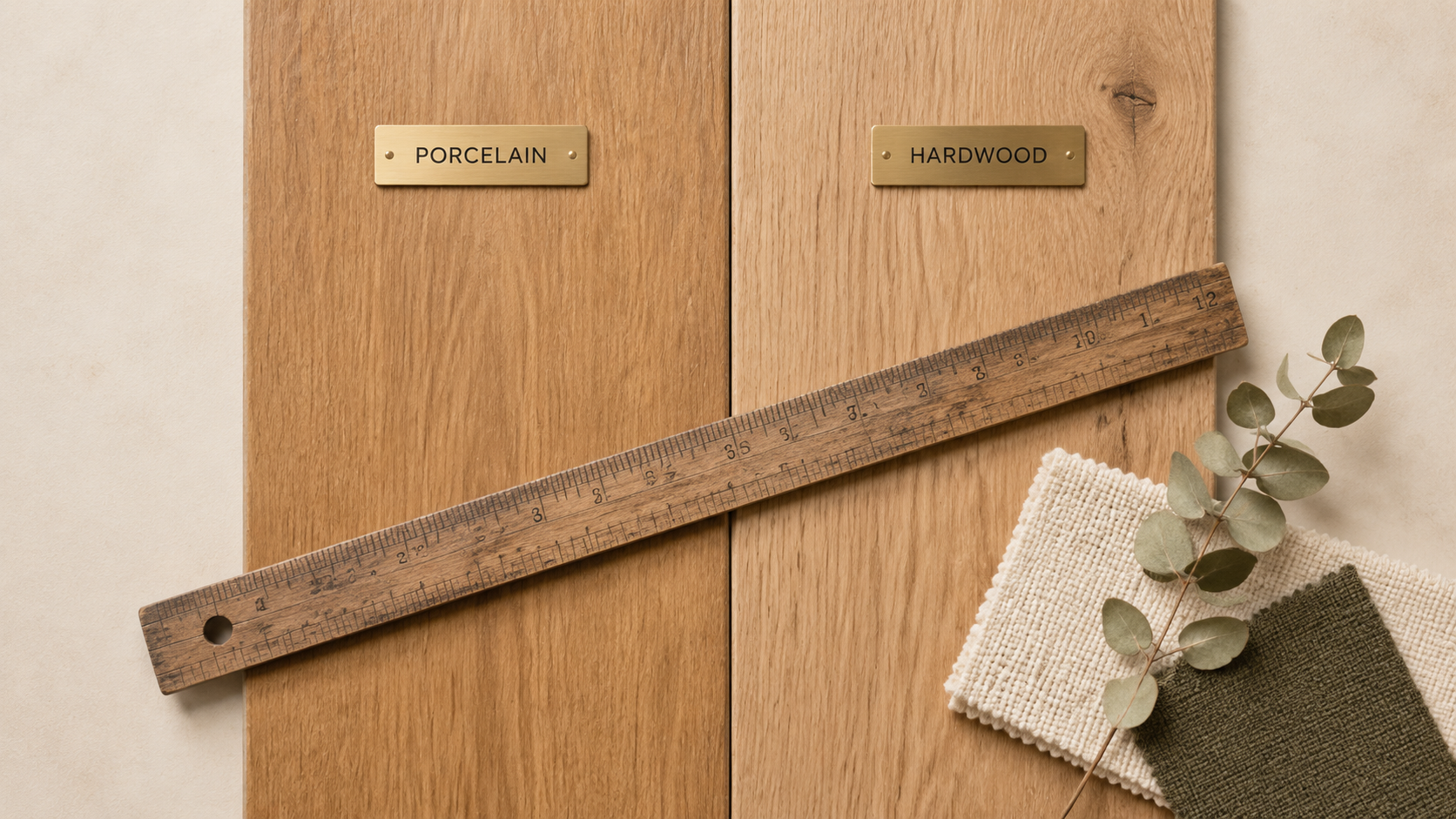
Our showroom on Main Street carries the full Hamilton Parker Essentially Wood line, plus the wood-look porcelain spreads in the MSI catalog. We pull samples for your in-home design consult and mock them up next to hardwood planks so you can see them at scale before you commit.
Browse wood-look tile and hardwood we install
- Hamilton Parker Tile — including the Essentially Wood and Vine Street Quad collections.
- Floor & Wall Tile — the full MSI tile catalog, 1,200+ patterns.
- Hardwood — engineered + solid, for direct comparison.
Mark anything you like and a Nova designer will bring physical samples to your free in-home consultation. We measure, design, deliver, and install — one team, one warranty.


